
China proposes to limit Solar Panel export to 10 GW annually in order to avoid EU's fury
SMA wields the axe on Workers as Revenues keep dropping
July 10, 2013Comparing JA Solar and Renesola Solar Modules – which one to buy
July 12, 2013China limits the Solar Panel export to Europe
The EU-China solar spat is the most talked about trade war in the history of solar industry. Europe initiated the biggest anti-dumping trade war against China. The European Union decided to levy anti-dumping duty of 11.8% on the imports from Chinese manufacturers early this June. If the countries do not come out with some sort of agreement in next 2 months, the duties might be raised substantially to a range of 37%-70%.
Read on GWI 11.8% provisional duty on Chinese produce, temporary relief for Chinese Solar Panel Manufacturers.
The latest update on the EU-China trade war is China limiting its solar panels export to Europe. The limit has been set at 10 GW per year in order to avoid anti-dumping duties. Now China seeks Europe not to impose any duties if exports are within the said range. China has also asked the EU not to impose duties on hundred Chinese solar companies including Yingli Green Eenrgy (YGE) and Trina Solar (TSL). However if both Europe and China do not come up with an agreement, the rate of duties is expected to increase substantially.
Is China responsible for the Supply-demand imbalance in the Global Solar Industry
Currently the solar industry has too much supply, thus leading to a supply-demand imbalance. The Chinese Governments and banks 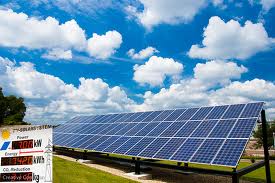 have always been very supportive of their local green industry and have always helped their domestic companies grow with funds and subsidies. The classic examples have been Suntech and LDK which managed to exist just because of the benevolence of the Chinese Government. Thus there was a massive increase in the number of Chinese solar companies which catered to the entire global demand. The Chinese supplied the panels at low rates, resulting in the industry buying more and more from China. China has a previously set goal to install 21 G W of solar capacity by 2015, of which it plans to install 10 GW capacity in 2013 itself. 5 of the biggest Solar Panel Manufacturers are Chinese.
Europe accounts for almost 75% of the world’s demand of solar panels and has been instrumental in the growth of the Chinese solar industry. Europe is a huge market for the Chinese and the loss of this market will sound the death knell of the biggest Chinese companies.
China is proposing to limit exports of solar panels to the European Union to 10 gigawatts a year to avoid anti dumping tariffs, the Shanghai Securities News said.
China is asking the EU to reduce or remove duties on panels within the limit and pledged to keep prices at or above 50 euro cents ($64 U.S. cents) a watt, the newspaper said, citing Wang Sicheng, a researcher at the Energy Research Institute, an adviser to the government.
Chinese solar-panel output is about 20 gigawatts a year, Wang said. The institute is under the National Development and Reform Commission, China’s top economic planning agency.