
Samsung Solar Panels Review of Prices of PV Cells Module (UK,Ontario)
Nifty Future Tips – Fastest Way to Lose Money by Falling into Nifty Intraday Tips,Nifty Option Tips Trap
July 5, 2011Iron Ore Mining in India – List of Companies(SAIL,Sesa Goa), Iron Ore Mines (Orissa,Jharkhand,Rajasthan) and Extraction Process
July 5, 2011Samsung had decided a couple of years ago that it wants to be a major player in the Green Industry and has lined up billions of dollars to invest in solar and wind energy over the next decade.The company is already starting up massive solar panel plants and wind turbine factories as it hopes to capture a large chunk of the clean technology industry.Samsung is a global leader in the Semiconductor area which it is trying to reinforce by huge capital expenditure.Samsung has strong expertise in the areas of LCD and Memory manufacturing and technology, which it can easily leverage to develop Solar Thin Film technology.However,Samsung is focusing its efforts on high efficiency Crystalline Solar Technology.It recently announced a big investment commitment to Ontario in offshore wind and solar manufacturing and generation.The company wants to rival conglomerates like GE and Siemens which already have a large presence in wind,solar and smart grid technologies
Samsung SDI to invest $2 billion into solar power
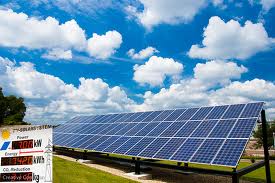 Samsung is entering into production of polysilicon setting up a 10,000 ton plant in an equal JV with US Poly Producer MEMC.The plant will be set up in South Korea and will go onstream by 2013 as it takes around 2 years to set up a plant. Samsung Electronics the parent company of the Group has transferred the solar panel business to Samsung SDI for 161 billion won.This will focus the Green activities of the Samsung Group to Samsung SDI as it looks to become one of the largest Green players in the world.Samsung SDI has made an ambitious plan to invest $2 billion into the solar power to capture 8% of the global market by 2015.Given the track record and the massive resources of the Samsung group it may not be a castle in the air.However it remains to be seen how successful it will be given that Korean Solar Energy is itself seeing massive investments and rivalry between the big chaebols.Note the competition in the solar energy market is fierce and is currently seeing a major price war which has already resulted in big time casualties like Evergreen solar.Samsung solar panel manufacturing facilities are located in Giheung-gu, Yongin-si, Gyeonggi-do, South Korea
Samsung Solar Modules Review
Samsung does not have very well established distribution channels though it sells solar panels in Australia and UK.The company’s lineup of solar panels from its website suggests that it is selling 188-250 Watt Solar Panels mainly with efficiency of 14-16% which is normal for other solar panels.The Solar Panels use the Monocrystalline Technology.It sells white and black solar panels.Don’t know what the white solar panels mean though.
Samsung Solar Warranty is quite standard for the industry with no surprises and has the normal IEC and UL Certifications.All in all Samsung Solar Panels are very typical crystalline solar panel without any distinction from the rest of the solar panel industry.It does not seem that Samsung is trying hard enough in the solar panel industry as of now though I expect it to change in the future.
Samsung Solar Panel Prices
Samsung Solar Panels Prices are retailing only in a few places and that too for about $2.5/watt which is too high for a new solar panel producer when much more established solar panel brands can be bought at $1.8-2/watt.Samsung Solar Panels have no differentiation from other in technology and features.Until Samsung puts more effort into the solar energy space you might be better off buying solar panels from other quality brands especially when Samsung solar panels are also quite high priced as of now.Samsung Solar Panels are also restricted in terms of the power ratings and they don’t seem to have specific solutions for different segments of the market like commercial and utility segments like Sharp or Sunpower.
| 1 | LPC232SM-02 | 232W Monocrystalline Module |
| 2 | LPC235SM-02 | 235W Monocrystalline Module |
| 3 | LPC238SM-02 | 238W Monocrystalline Module |
| 4 | LPC241SM-02 | 241W Monocrystalline Module |
| 5 | LPC244SM-02 | 244W Monocrystalline Module |
Solar Panel Reviews of Different Brands
Understanding the Costs of a Solar System Installation
Solar Panels Costs
Solar Panels cost for the cheapest solar panel manufacturers in around $1.10/watt and they retail for around $2-2.5/watt of residential customers.Note for utility large scale buyers of solar panel buyers,the cost is much lower.Solar Panels Costs have trended down quite in the last 3-4 years except in 2010 when they went up as solar panel demand increased by more than 150% .Solar Panel Costs are the biggest component of a Solar System Cost.The costs for Solar Panels are lower for Thin Film Solar Panel for example First Solar Panels are much lower in cost but have lower Solar Panel Efficiency .Solar Panels in general cost between40-60% of the total system costs
Solar Inverter Costs
Solar Inverters cost around 50c/watt for small buyers of solar systems but can cost lower for large kilowatt inverter sizes and for scale buyers.Solar Inverters are a crucial component of a solar system and make up around 10% of the solar system costs.Here is a list of major solar inverter brands
Solar Installation Costs
These are the costs paid to the installers/electricians to connect solar panel systems and the balance of systems (BOS) to the grid or the customer installation.Solar Installations costs can vary between 10-20% of the total costs
Balance of Systems (BOS)
Permitting,Inspection,Regulation,Other Costs
Most Solar Panel Installations get a government subsidy in most parts of the world and involve a lot of paperwork,regulation,inspection etc.These can vary substantially depending on where the solar panel installation takes place.In USA the red tape involved is quite cumbersome and can form upto 30-40% of the total costs in the worst cases.In Germany which is the world leader in solar energy,the process is very smooth and can be done at 5% of the total system costs.