
Vietnam and Thailand Solar Cell makers make hay while US duties shine, but for how long
Solar PV Installation numbers by Country in 2015 and expected by 2016
July 21, 2016Masala Bonds – Are they worth the yield?
July 22, 2016Solar Cells in Thailand and Vietnam
One of the major reasons why Taiwanese solar cell companies made a sharp comeback after the prolonged solar downturn in 2012, was the anti-dumping duties imposed on Chinese made solar cells by USA government. This forced the Chinese solar panel producers to source Taiwanese made solar cells to allow panel exports to USA. This resulted in a strong order surge for Taiwanese producers also allowing them to sell their solar cells at a premium. However, the whole House of Cards collapsed once the USA government also included the Taiwanese companies under the purview of the anti-dumping act.
The Chinese companies were again forced to look for newer locations to source cells. Malaysia was a natural choice given that it already has a 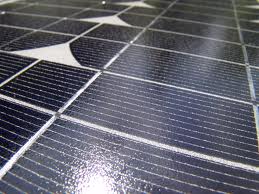 well-developed solar manufacturing industry. Some large players such as Jinko Solar and JA Solar set up factories there to serve the US markets. Some Chinese companies took a different tack by setting up plants in low cost SE Asian countries such as Vietnam and Thailand. These companies have prospered, as the USA market has grown larger in size in the past few years. Many of them are expanding capacity rapidly, as they see the same Taiwanese story repeat in their country. These companies are seeing full order utilization as well as high prices for their products. So even as some Tier 2 Chinese solar companies are being forced to reduce prices and lower production, these companies are going ahead full steam.
Read more about Factors governing Efficiency of Solar Cells.
However, I think that trouble awaits these companies in the near future. Their business models are not sustainable, as they are built on the false foundation of the USA anti-dumping duties continuing. If the USA anti-dumping duties are stopped for any reason or the USA government also includes other Asian countries in the act, their whole basis of existence might come under question.
Vietnam Solar Company
Powerway Alloy Material a Chinese company is planning to expand its Vietnamese subsidiary Boviet Solar’s capacity. This company which started with a 20 MW capacity in 2012 has seen its capacity bloat to 660 MW now, and will soon see an increase in capacity to 1 GW. The company is also planning to produce PERC solar cells, with a capacity of 400 MW.
While its Chinese parentage may help this company survive any possible change in USA policy I do not think it can prosper, given that Powerway has no solid solar industry background or heft. The company does most of the production on an OEM basis for other large Chinese companies. Once the duties go away, these orders will inevitably dry up, as production in the Chinese mainland is cheaper and also logistically easier.
Thailand Solar Company
Tek Seng Holdings is an indigenous Thai solar company that has set up solar cell production facilities in Thailand. Like Boviet, the company exports most of its production to large Chinese companies who need to source non-Chinese solar cells. The company which has a capacity of around 250 MW now is planning to triple the capacity.
The company which was mainly into manufacturing of PVC, now derives most of its money from the solar business. Tek Seng which does not seem to have strong Chinese linkages could find itself in big trouble if the US duties go away. It may suddenly find that it has no orders at all for its solar cells, given that it does not have any competitive advantage and there are bigger and better players in Taiwan and China. Also Thailand solar demand is quite small and they will not be able to ship much to the local domestic market
Tek Seng Holdings Bhd’s solar cell business is to generate about 70% of the company’s revenue this year, given that the order book has been filled till the end of this “With nine lines in full operation, our capacity per annum from end 2016 onwards would be 740MW or about 156 million pieces of solar cells, which will have a market value of US$234mil, based on today’s market value of solar cell,” Loh said.